Summary Findings of 2026 USFW Pinyon Jay Surveys conducted by ECBA Volunteers
The East Cascades Bird Alliance (ECBA) Pinyon Jay Survey in Central Oregon (March–May 2026) focused on documenting the presence, numbers, and reproduction of pinyon jay (Gymnorhinus cyanocephalus). This species is under review for Endangered Species Act (ESA) listing and identified as a Species of Greatest Conservation Need in Oregon’s 2025 State Wildlife Action Plan. Limited prior research and information on local populations and habitat are scant in Central Oregon, prompting the need for systematic surveys to better understand local populations and threats, which include habitat loss due to drought, insect damage, disease, and tree removal.
Volunteers from ECBA were trained by wildlife professionals through online sessions in March. They surveyed 12 sites – 10 previously known and 2 newly identified (including Juniper Trail). Surveys required multiple site visits between March 15 and May 30, 2026, following a standardized protocol from the Pinyon Jay Working Group. Volunteer coordination and communication were facilitated through digital tools, involving ECBA coordinators and FWS staff.
Observations confirmed pinyon jay presence at every surveyed site, with nesting behavior recorded at eight of the 12 sites. The surveys also documented the movement of nesting sites within and outside previously surveyed polygons. Four previously surveyed sites showed nesting was absent, and volunteers discovered one entirely new nesting site around Cline Butte. Flock sizes ranged from 20 to 150 birds, with the Mayfield Pond survey area hosting the largest flock. Nest building behavior was noted at all active nesting sites. While nesting did occur at these sites, it was only at the Barr Road and Mayfield Pond survey areas that volunteers documented nestlings, fledglings, and fledging flock numbers.
No survey season is without challenges, and this one ran into some! Volunteers could not meet protocol-level survey requirements at two of the 12 sites due to insufficient visits. These sites will need to be surveyed next year to confirm nesting is still occurring at them and to track nesting trends. Additionally, BLM conducted a fuels treatment in one of the occupied juniper stands near Cline Butte. Nesting was finished when the treatments took place, but the disturbance prevented late-season monitoring of fledglings in the survey area. Surveys next year will help determine how the treatments in this area impact re-nesting. Notably, at least one cut tree had a nest at the branch-trunk junction that had previously been confirmed as a pinyon jay nest.
In summary, ECBA volunteers surveyed 12 sites around Bend/Redmond/Sisters, recording nesting behavior at eight previously known sites and documenting two new nesting areas. Data collected by volunteers included timing and characteristics of nesting, flock numbers, movement of nesting sites, and photographs showing behavior; all of this data provide valuable baseline information as well as information for future management and research on Central Oregon Pinyon Jays. A full detailed report of findings has been provided to ECBA. As surveys continue through the years, it is our hope that these data will be useful to detect trends in habitat use and bird numbers.
-

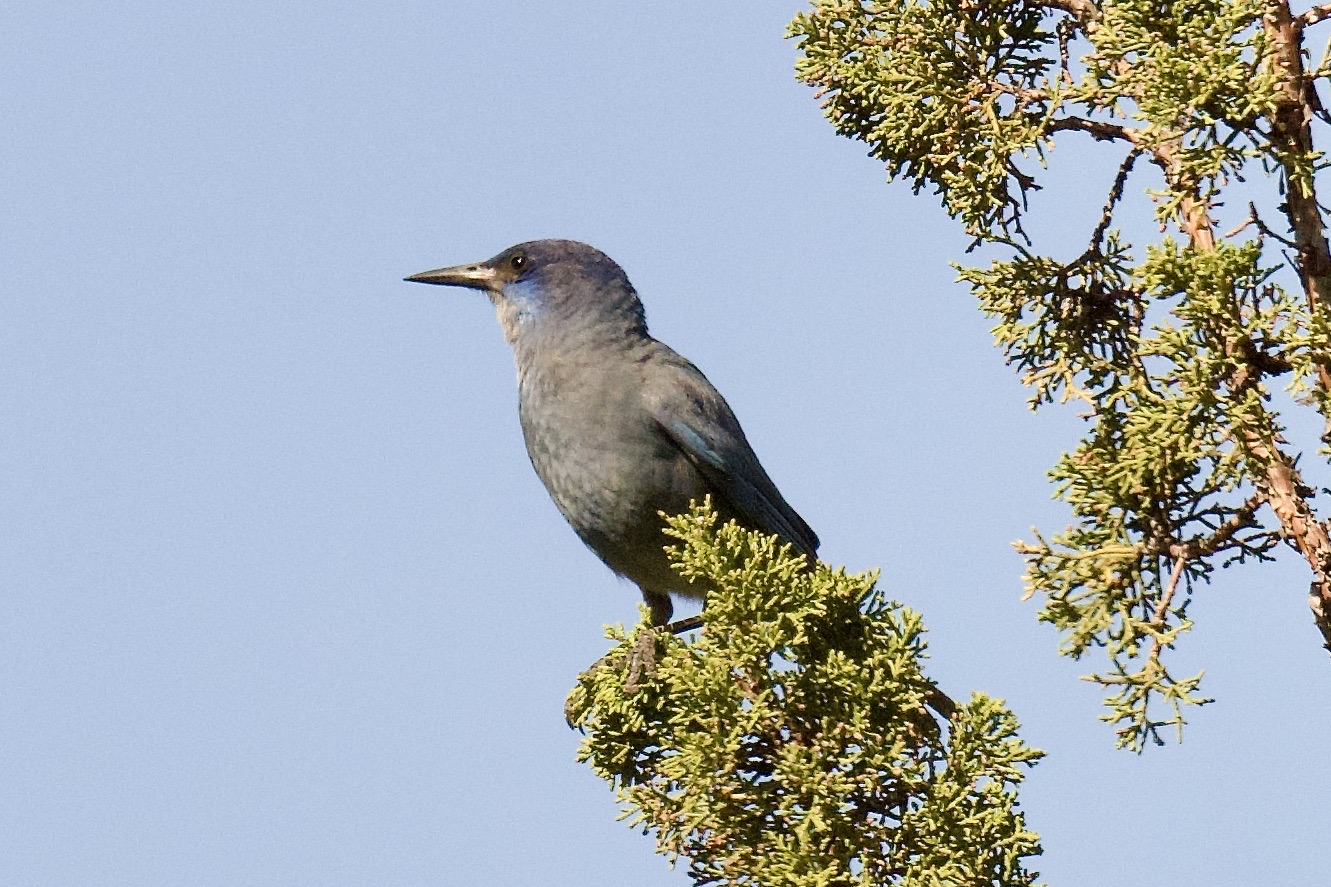
Pinyon Jay adult sentinel typically perches on the tops of conifers, photographer, Laurel Collins
-
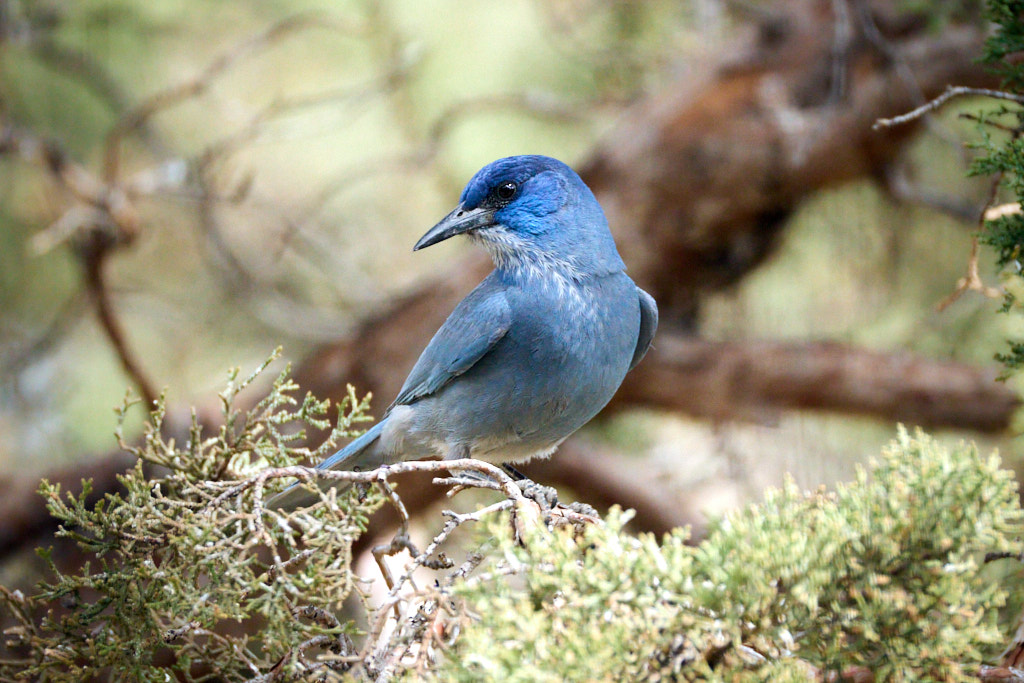
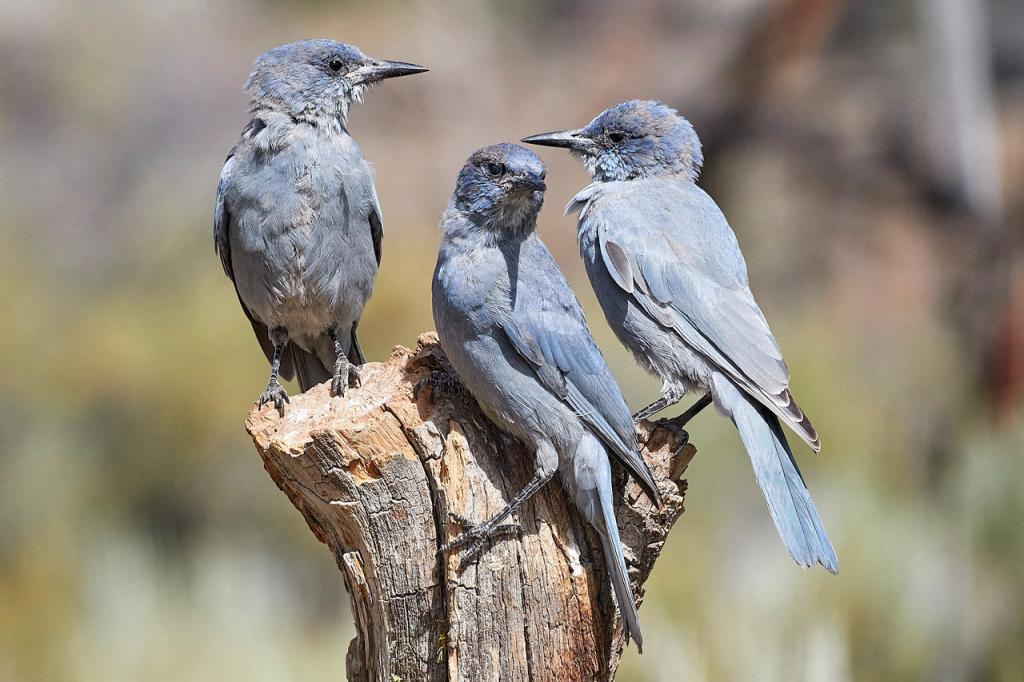
Pinyon Jay, photographer, Abbott Schindler
-
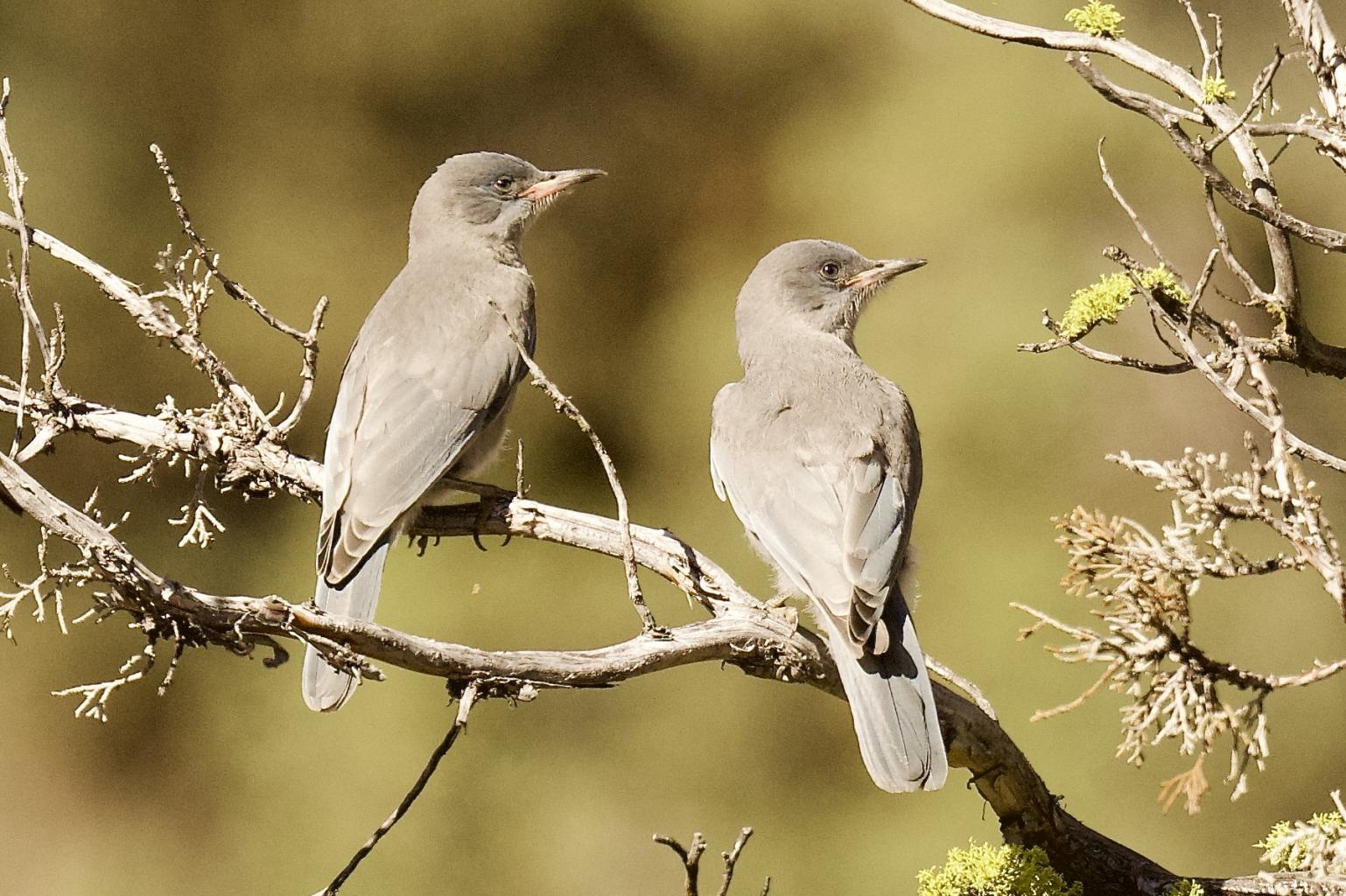
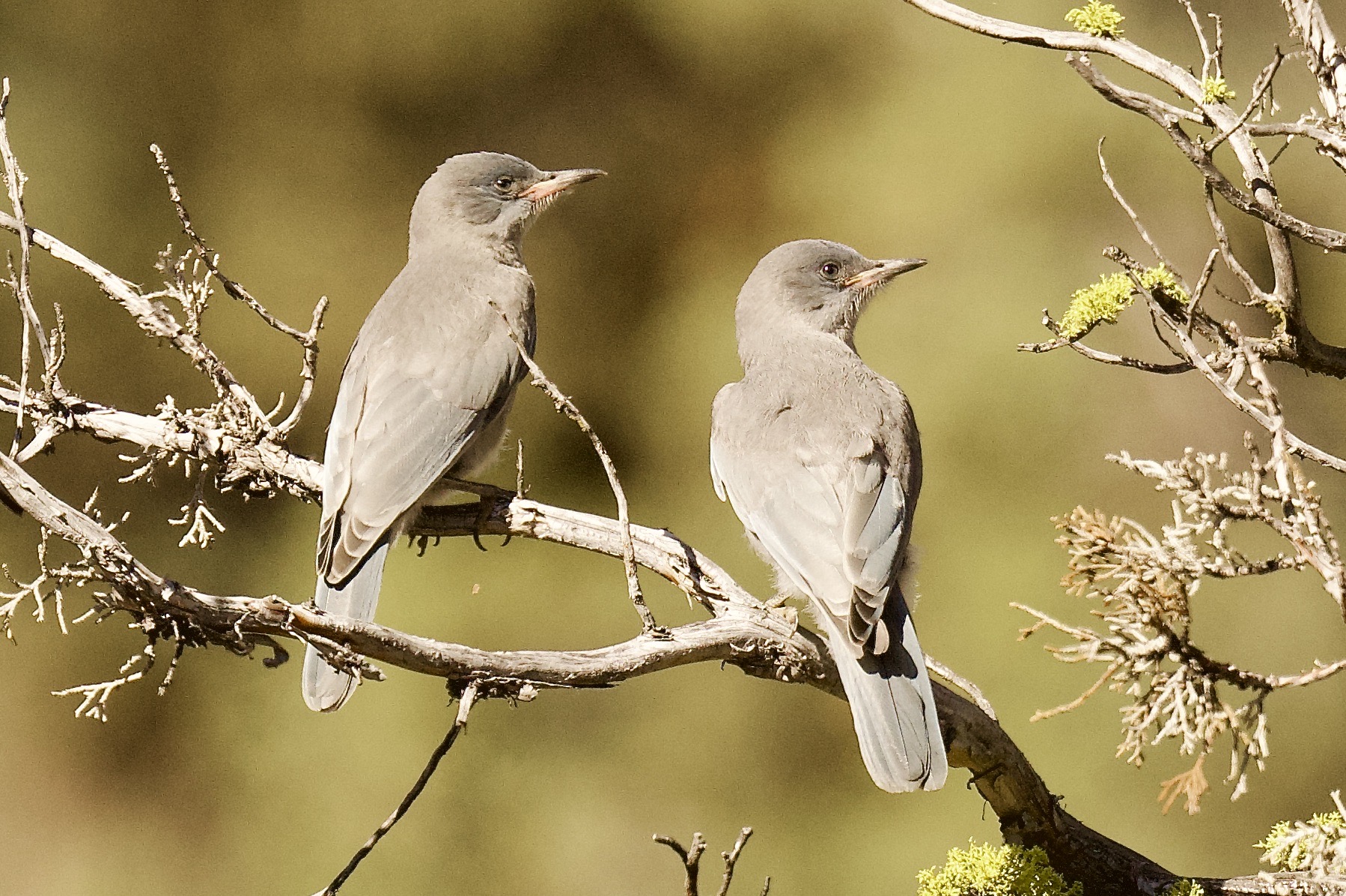
Pinyon Jay fledglings, note gray coloration as opposed to the blue of an adult, photographer Laurel Collins
-
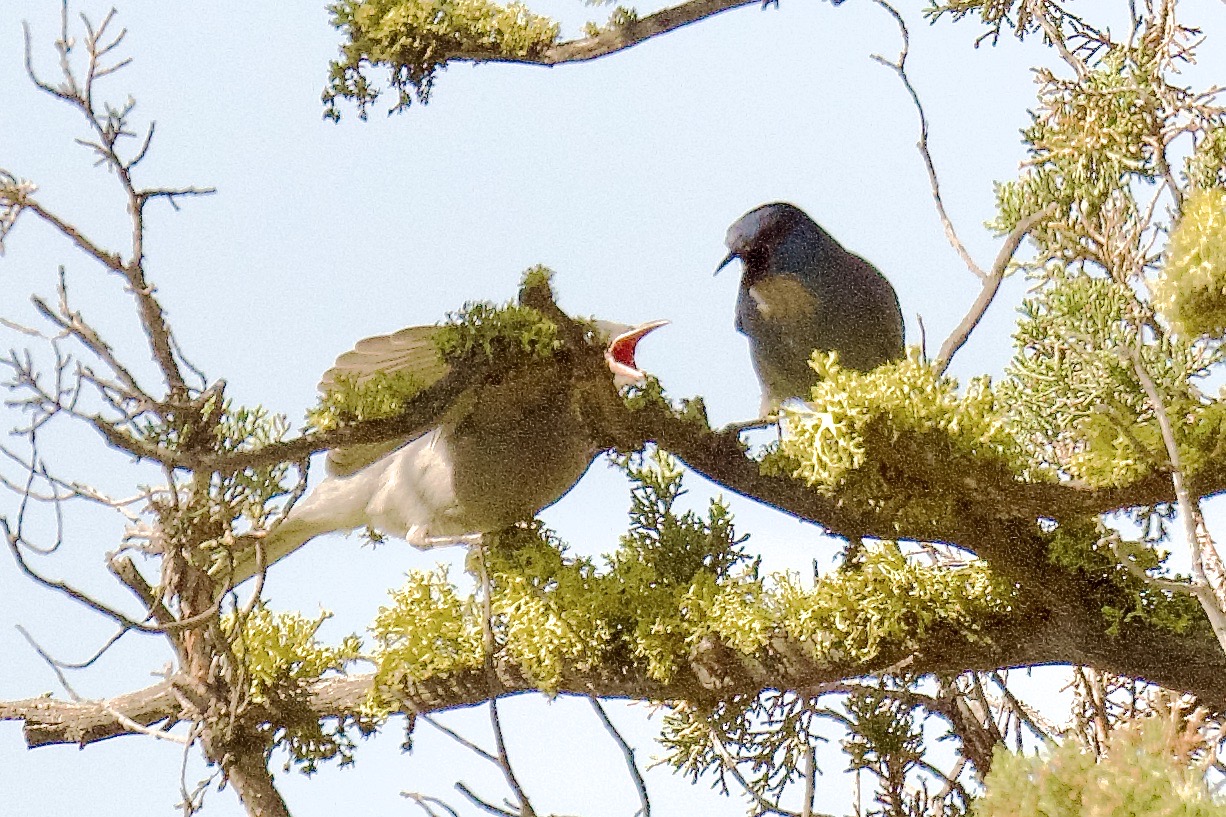
Fledgling begging to be fed, photographer Laurel Collins