Please sign and send by the next City Hall Town Meeting which is June 17
Written by ECBA Conservation and Science Chair
Download and print the petition to sign and share
Rat poison unnecessarily threatens the health of pets and wildlife in Deschutes County.
The commercial poisons used to kill rats, mice, squirrels, gophers, and other rodents are called Rodenticides. They are formulated with rodent food attractants and placed in bait stations wherever rodents are unwanted. Most bait stations are black plastic boxes with holes at either end commonly observed on the ground around public and private buildings. Despite what their name suggests, Rodenticides are toxic to most vertebrate animals, not just rodents. Rodents and other animals that ingest large enough doses of rodenticides, at once or over time, eventually die from paralysis, kidney failure, or internal bleeding 1.
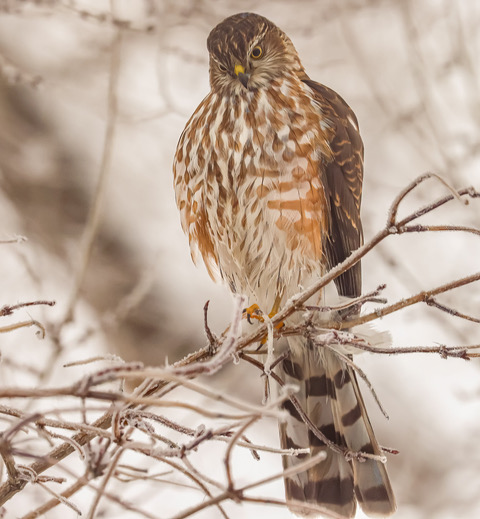
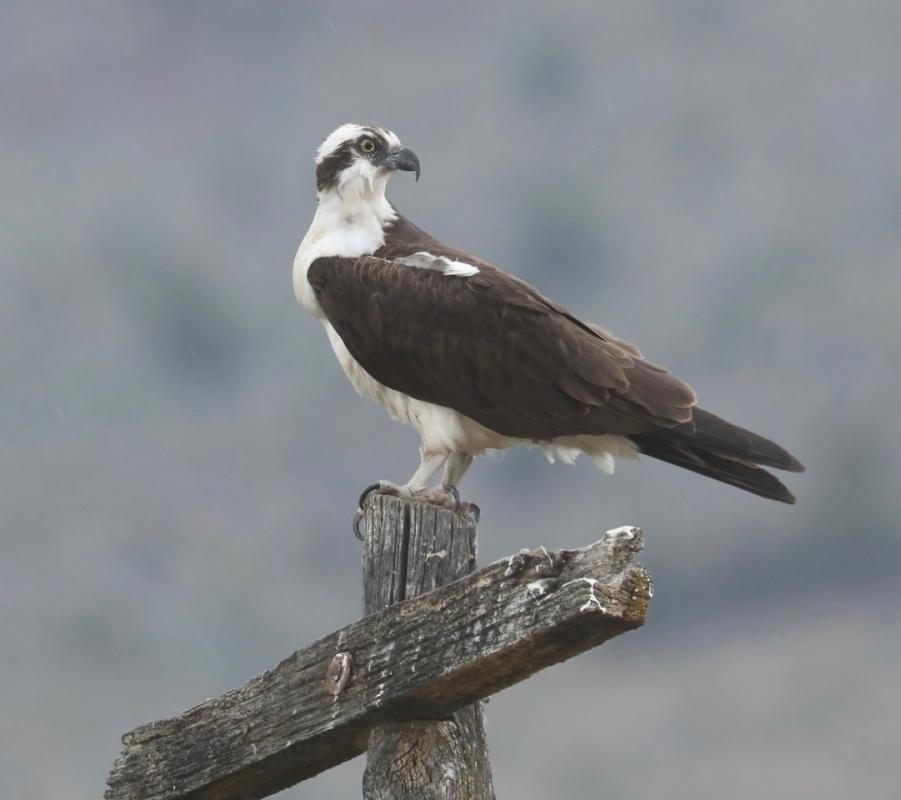
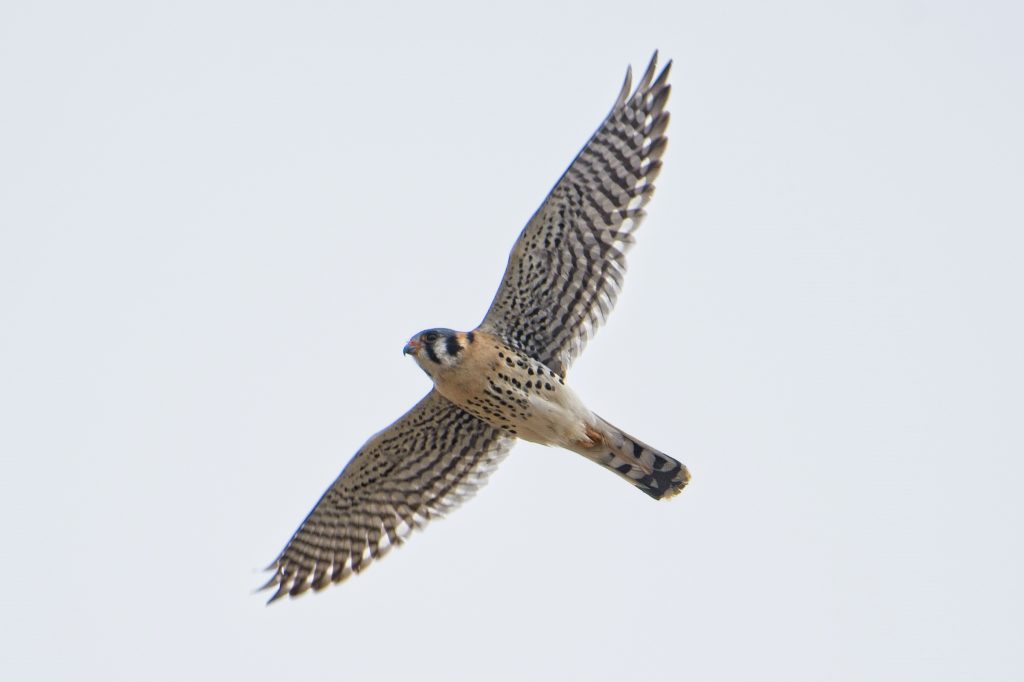
Rodenticides don’t kill immediately, Rodents that leave bait stations are weakened and toxic. They reenter our neighborhoods and open spaces as poisonous food for pets and native predators and scavengers, including owls and other birds of prey, vultures, foxes, bobcats, mountain lions, bears, and wolves. This is called secondary poisoning. It’s a major cause of wildlife declines wherever Rodenticides are used 1, 2, 3. A Great-horned Owl, a Coopers Hawk, and a Sharp Shinned Hawk were recently found dead in yards north of Bend’s Pioneer Park, in close proximity to bait stations.
Rodenticides are being used throughout Deschutes County. Effective control typically requires continuous or repeated use of rebaited stations because the target rodents, mainly rats and mice, tend to rapidly recolonize control areas.
To reduce the risks to wildlife, pets, and people, especially children, USEPA has recently required safer bait station designs and handling protocols, and has revised the kinds and amounts of Rodenticides that can be used by private citizens and pest control professionals. USEPA has also drafted recommendations for preventing secondary poisoning of protected wildlife species, as part of a strategy to prevent the pest control industry from violating federal environmental protection laws, including the Endangered Species Act and the Migratory Bird Conservation Act. But USEPA has yet to adopt any guidelines to significantly reduce secondary poisoning 2. As a result, since the use of Rodenticides is increasing 4, so is the problem of secondary poisoning 5, 6.
Our ability to effectively control rodents, especially rats and mice, is important. They pose one of the most serious threats to food production worldwide by damaging crops, stored foods, and agricultural equipment 7. More importantly, they can harbor and transmit deadly diseases to people, namely Hantavirus, Leptospirosis, Plague, and Rat-Bite Fever 8.
However, these diseases are rare in Deschutes County, and in Oregon overall. Since 1993, there have only been seven confirmed cases of Hantavirus, including two fatalities 9. Leptospirosis can be transmitted by many animals besides rodents. Dogs and farm animals are the most common victims. Fortunately, annual vaccinations can effectively protect animals from Leptospirosis 10. There have been nineteen cases of human Plague in Oregon since 1934, two of which were fatal. Rat-Bite Fever might be under-reported, but there are no records of it in Oregon. Secondary poisoning of pets is also rare. Local veterinarians and officials have historically reported a few sporadic cases of suspected secondary poisoning of cats and dogs in Deschutes County. Malicious poisoning of pets has been more common.
Every case of disease transmitted from rodents to people, pets, or farm animals matters. Fortunately, the risk of fatal infection is minor. Human and veterinary medicine have done well to protect us. Nevertheless, the most common pest control methods have greatly increased the risk of secondary poisoning of many native wildlife species, contributing significantly to their declines.
The solution to the problem of secondary poisoning seems obvious. We need to either stop using Rodenticides, invent and use better bait stations that prevent poisoned rodents from reentering the environment, or effectively collect and dispose of poisoned rodents before secondary poisoning can occur.
The East Cascades Bird Alliance supports the control of rodents that threaten the health and safety of people, pets, and farm animals. However, for the sake of wildlife, we call for a ban on all uses of Rodenticides in Deschutes County until they can be used in ways that prevent secondary poisoning of wildlife. Until then, only methods of controlling rodents that do not result in secondary poisoning, such as snap trapping, live trapping, and encouraging natural predation, should be allowed.
Download and print the petition to sign and share
https://www.audubon.org/magazine/poisons-used-kill-rodents-have-safer-alternatives
https://www.science.org/content/article/really-scary-rat-poisons-wreaking-havoc-raptors-wildlife
Citations
- Rodenticides: Final Biological Evaluation, Effects Determinations, and Mitigation Strategy for Federally Listed and Proposed Endangered, and Threated Species and Designated and Proposed Critical Habitats. November 21, 2024. Environmental Fate and Effects Division, Office of Pesticide Program, USEPA, Washington DC.
- Restrictions on Rodenticide Products. U.S. Environmental Protection Agency. 2024.https://www.epa.gov/rodenticides/restrictions-rodenticide-products.
- Herring, G., Eagles-Smith, C.A., and Buck, J.A., 2023, Anticoagulant rodenticides are associated with increased stress and reduced body condition of avian scavengers in the Pacific Northwest: Environmental Pollution, v. 331, Part 2, Online. https://doi.org/10.1016/j.envpol.2023.121899.
- Rodenticides Market Size, Share & Industry Analysis, 2026-2034. Fortune Business Insights. https://www.fortunebusinessinsights.com/rodenticides-market-102826. Accessed May 9, 2026.
- Van den Brink, Nico W.; Elliott, John E.; Shore, Richard F.; and Rattner, Barnett A., Anticoagulant Rodenticides and Wildlife. 2018. USDA National Wildlife Research Center – Staff Publications. 2098.
- Maron DF. Rat poison’s long reach. Science. 2024 Jul 12;385(6705):134-137. doi: 10.1126/science.adr5941. Epub 2024 Jul 11. PMID: 38991052.
- Witmer, G. 2022. Rodents in Agriculture: A Broad Perspective. Agronomy 12, 1458. https://doi.org/10.3390/ agronomy12061458.
- Are Rodents a Health Risk in Washington and Oregon? Interstate Pest Management. August 22, 2023. https://www.interstatepest.com/blog/health-hazards-rodents-pose-to-humans-sw-washington-oregon/.
- Hantavirus kills Deschutes County woman The Bulletin June 4th, 2018. https://bendbulletin.com/2018/06/14/hantavirus-kills-deschutes-county-woman/#google_vignette.
- Leptospirosis in Animals. Center for Disease Control. U.S. Centers for Disease Control and Prevention. https://www.cdc.gov/leptospirosis/pets/index.html.
- Deschutes County resident found to have the plague. Bend Bulletin February 7, 2024. https://bendbulletin.com/2024/02/07/deschutes-county-resident-found-to-have-the-plague/.