A Brothers Project report as of March 21, 2026 examining our November, 2025 plantings.
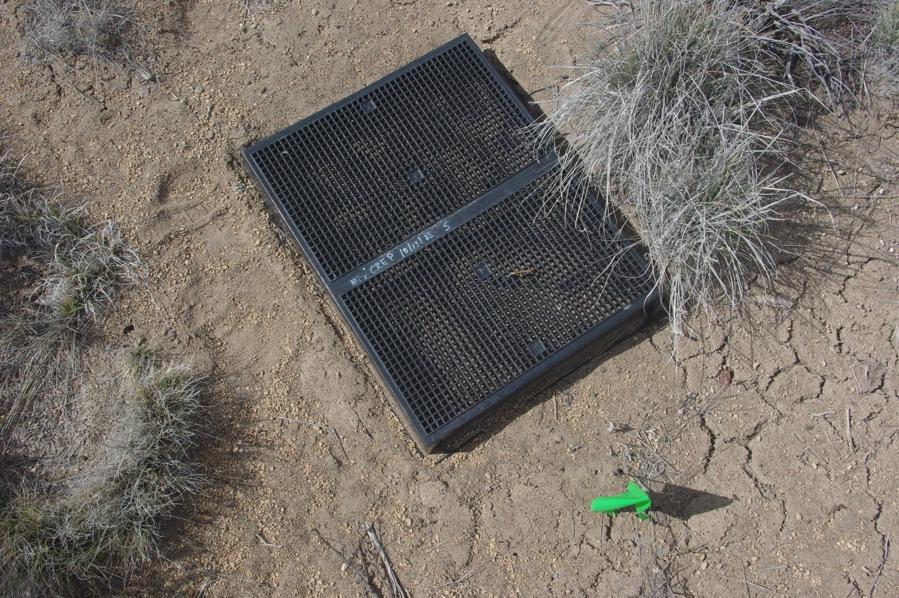
In 2025 we were experimenting with different types of crop cover to enhance native seed germination and growth. We put out a black plastic crop cover and plastic perforated trays to see which was more effective for seed germination and growth.
This photo shows the black crop cover to the left and a plastic tray to the right
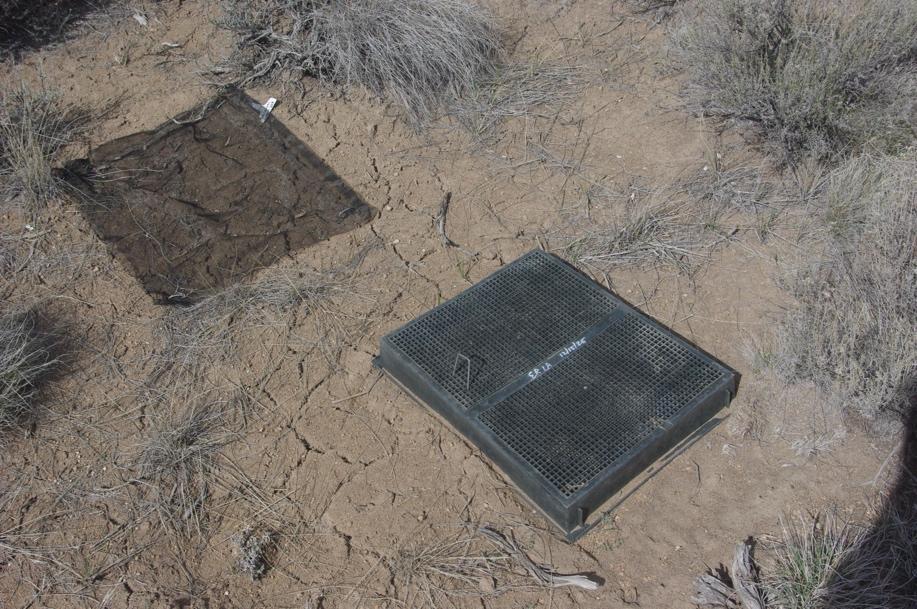
Below is a close-up of the plastic tray.
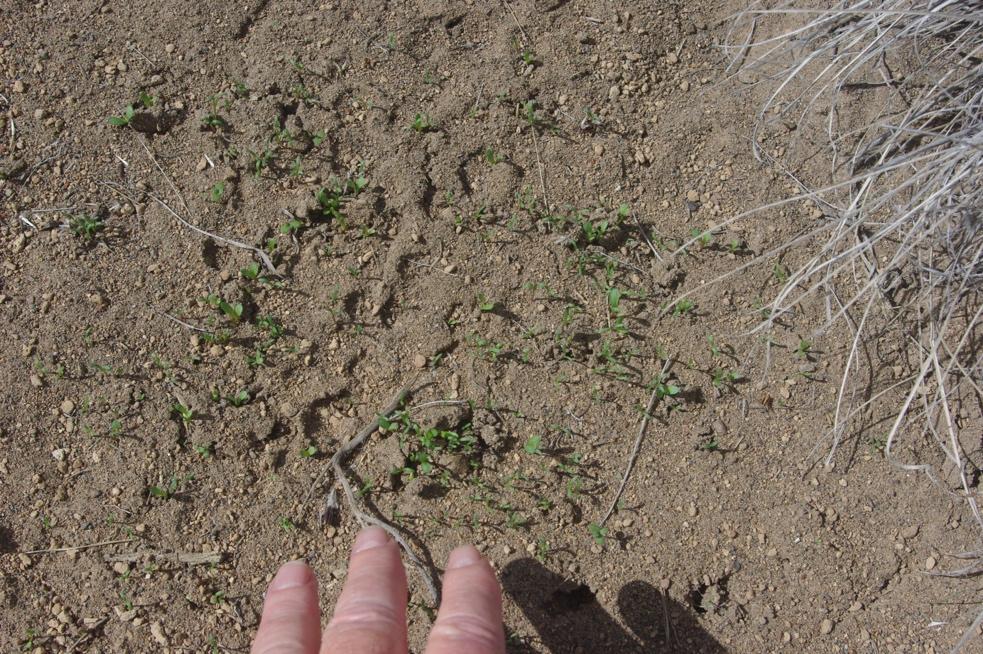
Below is a photo of the successful germination and growth of a mixture of grass and forb seeds under the black plastic tray. There was very little germination in the planted areas outside of the tray.
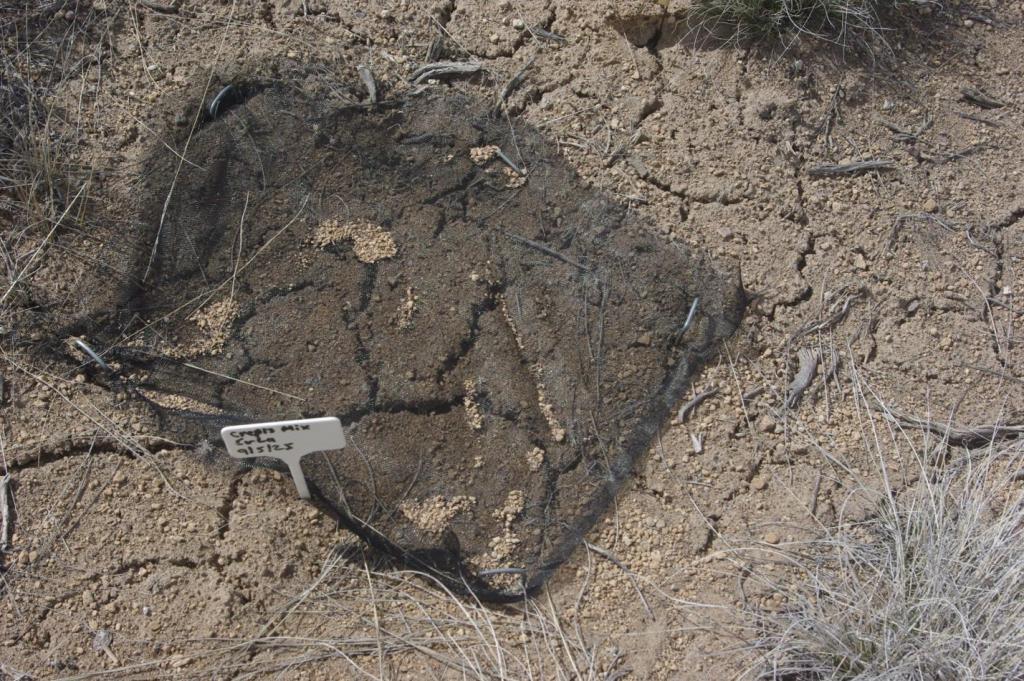
Below is a photo of the black plastic crop cover, which did not promote germination.
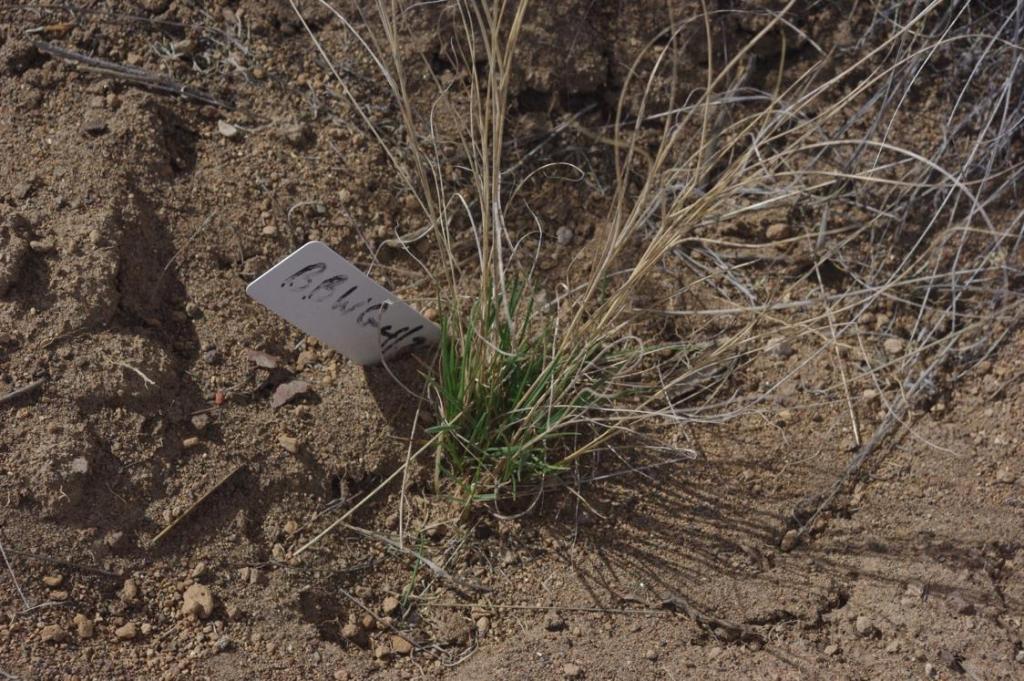
It was also apparent that the native bunch grass plugs, which we grew at home, had nearly 100% survival rate. See below native blue-bunch wheat grass collected locally and grown as a plug.
Below is an example of the native forbs that we planted as plugs. We had 90% survival of those plugs.
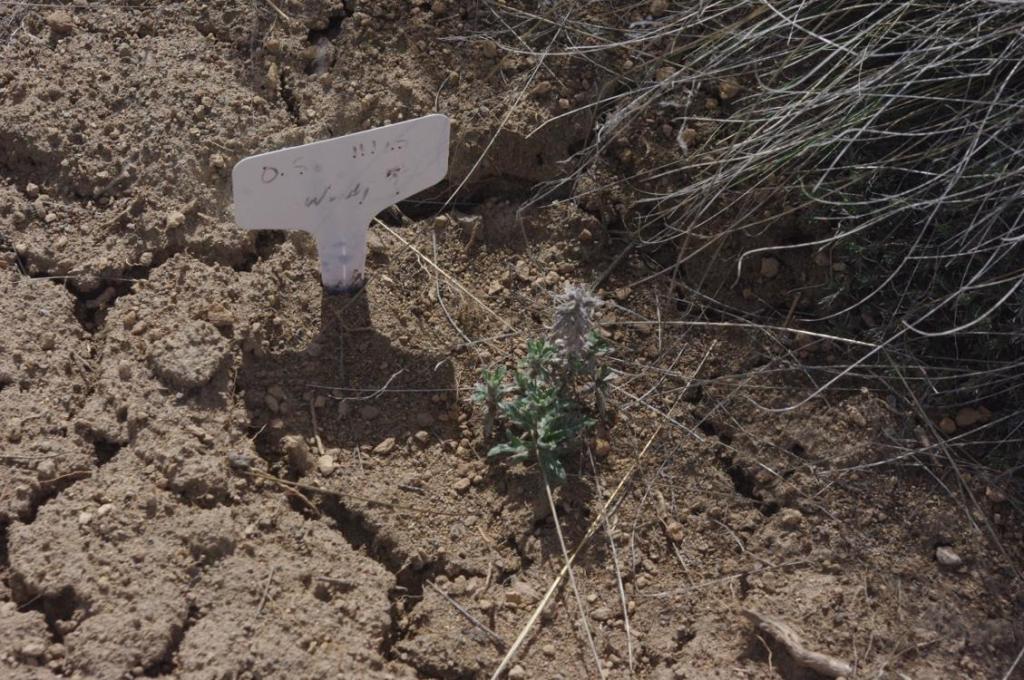
This was the driest winter we have had in many decades. I think some of the procedures we are developing make sense for restoration of the sage brush step in eastern Oregon. We hope to continue this project and share it with others who are interested in steppe restoration. The basis of our project is the concept of using resource islands as a practical way to restore Oregon’s steppe. This project is, in a sense, using islands inside of islands to get the process going.
Many thanks to ECBA for funding and for volunteers who contributed immensely to our success: Wendy Andrick, Gordon Wetzel, Josh Collins, Hilary Garrett, Greg Johanssen, Laurel Collins, Barb Rumer and others. We also thank TerraWest for allowing us to do this project on their private lands. We are also indebted to the local nurseries from whom we have bought such excellent native plant plugs for planting.
Stuart Garrett, MD
ECBA Sagegrouse Coordinator